
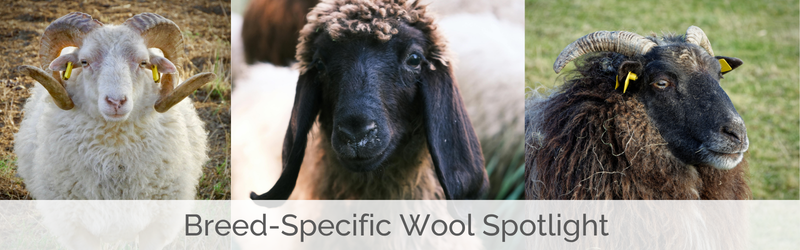
Many knitters find adventure in each project they cast on. For newer knitters, that adventure might begin with something simple: reaching for a colorway outside their usual palette, trying a yarn with a little more texture, or experimenting with a new stitch pattern or technique. These explorations build confidence and curiosity.
Knitters seeking a deeper adventure might consider breed-specific yarns. Instead of relying solely on wool and wool blends found in big-box stores or offered by larger commercial brands, breed-specific yarns offer an invitation to discover characteristics of specific sheep breeds. There are fibers with unique bounce, luster, strength, and rustic charm.
Why Knit with Breed-Specific Wool?
At its core, wool is a natural fiber with remarkable versatility. But not all wool behaves the same. Matching fiber to your project becomes more intuitive when you understand what each breed excels at. Finewools offer softness and bounce for next-to-skin garments. Longwools provide strength and sheen for textured designs. Down breeds deliver resilience and primitive breeds bring warmth and rustic charm.
Supporting Heritage Breeds
Breed-specific wool plays an important role in conservation. The Livestock Conservancy’s “Shave ‘Em to Save ‘Em” campaign encourages fiber artists to work with wool from sheep breeds on their conservation priority list: Critical, Threatened, Watch, or Recovering. Choosing yarn from these highlighted breeds helps preserve genetic diversity and support farmers working to keep these rare sheep populations alive and thriving. Their programs encouraging knitters to try multiple heritage breeds aligns beautifully with TKGA’s mission to educate and inspire knitters at every level.
Breed-specific yarns often come with a sense of place. They reflect the landscapes where the sheep graze, the traditions of the farmers who raise them, and the skill of the mills that spin their fleece. Even within a single breed, the wool can vary based on environment, diet, and flock genetics. These are yarns and are alive with nuance.
Knowing where to find breed-specific yarn is part of the adventure as well. Start with Donna Estin’s “Sources for Breed-Specific Yarn”, an extensive list of mills, farms, and companies where you’ll find Bluefaced Leicester, Masham, Romney, Jacob, Shetland, Cormo, Targhee, Polwarth, Navajo-Churro, Gulf Coast Native, and dozens more!
Understanding Breed-Specific Wool
Coming soon, TKGA members will have an exciting opportunity to dive deeper into this topic. Donna Estin also has a “Special Topics in Design” article on breed-specific yarns in the upcoming issue of Cast On magazine. In her article, she offers a designer’s perspective on how to pair yarn and design thoughtfully. She’ll explore considerations such as drape, elasticity, stitch definition, and garment structure, all of which elevate your knitting and help you make more informed choices.
When you understand what a particular breed’s wool is best at, you can match yarn to project with greater confidence. Your next cozy cowl, in a Finewool like Cormo or Targhee, will have softness and bounce. A structured cardigan will be durable and warm in a Mediumwool like Columbia or Corriedale. If you’re working on colorwork, Shetland remains a beloved choice for its lightly rustic hand that blooms beautifully.
Breed-specific yarn invites knitters to explore and appreciate the remarkable variety within the world of wool. It’s a way to honor tradition, celebrate biodiversity, and deepen your connection to the craft you love. As you plan your fall knitting, consider picking up a skein from a breed you’ve never tried and let the wool teach you something new.
Have you knit with a breed-specific wool you’ve loved? Let us know in the comments.


0 Comment